Everything About Local SEO For Small Businesses & Start-ups [How To Start Ranking Locally in 2026]
Uncategorized
June 15, 2026
Copy link

Kodegrid Team
Co-Founder
Share on:
[addtoany buttons="linkedin,x,medium"]

Co-Founder
Share on:
Table of contents
Table of contents
You built a great business. You show up every day, you deliver real value – and yet when someone in your city searches for exactly what you do, your name is nowhere to be found. A competitor down the street, who may not even be as good as you, shows up first. And they get the call.
That’s not bad luck. That’s a local SEO problem – and it’s one of the most common and underestimated problems in small business marketing today.
Nearly 46% of all Google searches have local intent, meaning people are actively looking for businesses near them. And 76% of those people visit or call a business within 24 hours of that search. That is high-intent traffic walking right past your door – or into a competitor’s.
This guide breaks down exactly what local SEO for Small Businesses is, why it matters more in 2026 than ever before, what the real benefits are for small businesses, and the specific steps you need to start ranking locally.
Local SEO for small businesses is the process of optimizing your online presence so your business appears in Google when people nearby search for what you offer.
Think “plumber near me,” “best coffee shop in [City],” or “emergency dentist open now.” Those are local searches – and local SEO is what gets you seen.
It’s different from regular SEO, which targets national or global audiences. Local SEO is geographic. It’s about being visible to the right people in the right place at the right moment.
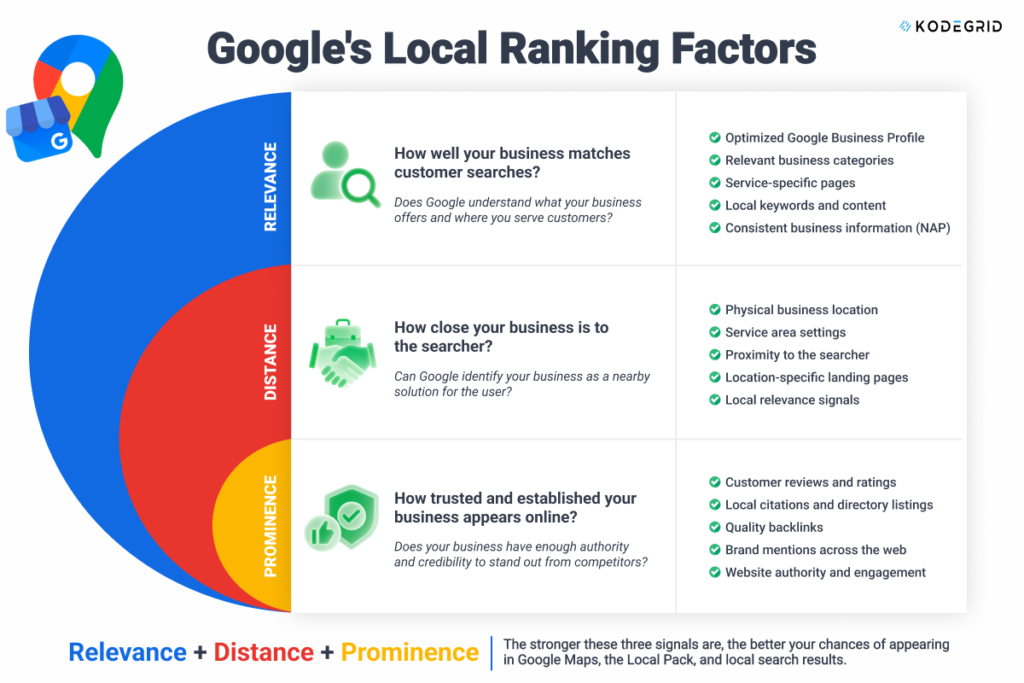
1. The Google Local Pack: The map with three listings you see at the very top of local search results. This is the most visible real estate in local search.
2. Google Maps: When users search directly in Maps or use navigation apps, a strong local SEO presence puts you on the map – literally.
3. Local organic results: The regular blue-link results below the map that are filtered by location relevance.
Local SEO isn’t one thing – it’s a combination of several interconnected signals. Here’s what actually moves the needle.
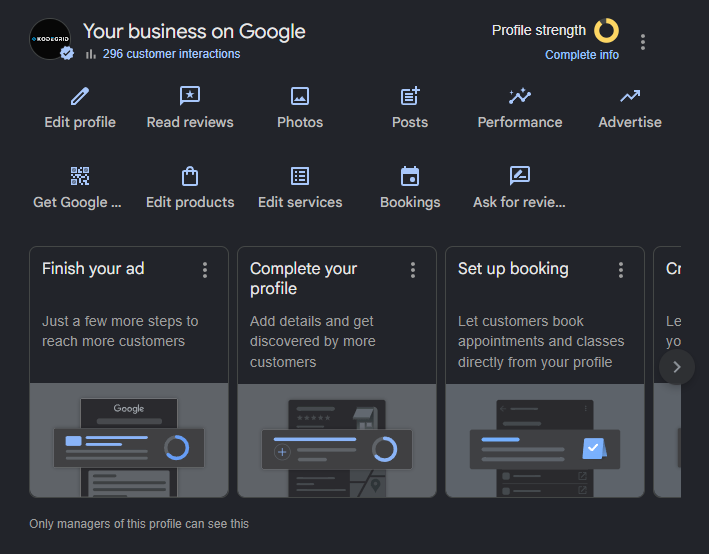
Your Google Business Profile (GBP) is the single most important asset in local SEO. It’s the panel that appears on the right side of Google, shows your hours, photos, reviews, and directions – and it feeds directly into local pack rankings.
A complete, accurate, and active GBP makes you 70% more likely to earn a location visit, according to Google.
Your website needs to speak Google’s local language. That means including your city and service keywords naturally in your page titles, meta descriptions, headings, and body content.
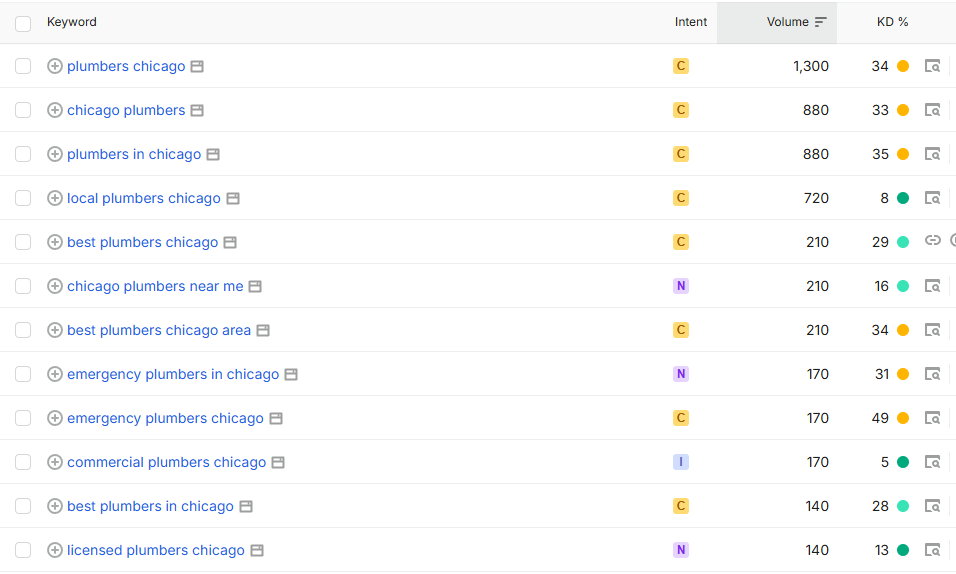
If you run a plumbing business in Chicago, your homepage title shouldn’t just say “Plumbing Services.” It should say something like “Plumbing Services in Chicago, IL.”
Create a dedicated location page for each neighborhood or area you serve-such as Lincoln Park, Wicker Park, Naperville, or Evanston-and make each page unique with localized content, service details, testimonials, and area-specific information.
Thin, duplicate location pages are actively suppressed by Google in 2026, so every location page should provide genuine value to local customers.
A citation is any mention of your business name, address, and phone number (NAP) online – on Yelp, Yellow Pages, Apple Maps, industry directories, and hundreds of other platforms. The key is consistency.
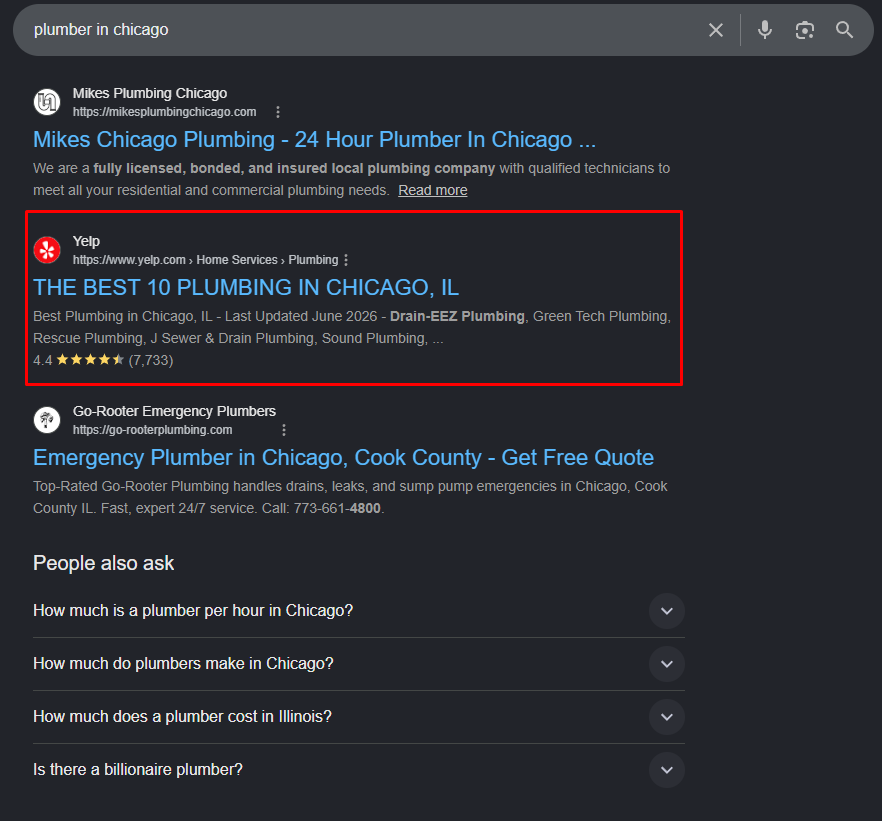
Right now, 64% of small businesses have NAP inconsistencies in at least one major directory. That might sound minor, but Google uses citation consistency as a trust signal – conflicting information confuses search engines and hurts your rankings.
More critically in 2026: only 68% of business information on ChatGPT and Perplexity matches their Google Business Profile data. Inconsistent listings don’t just hurt Google rankings anymore – they create an AI visibility gap that keeps you out of AI-generated local recommendations entirely.
Reviews are local SEO fuel. They directly influence your local pack ranking (review signals account for 16% of local pack weight), and they determine whether a searcher picks you or your competitor.
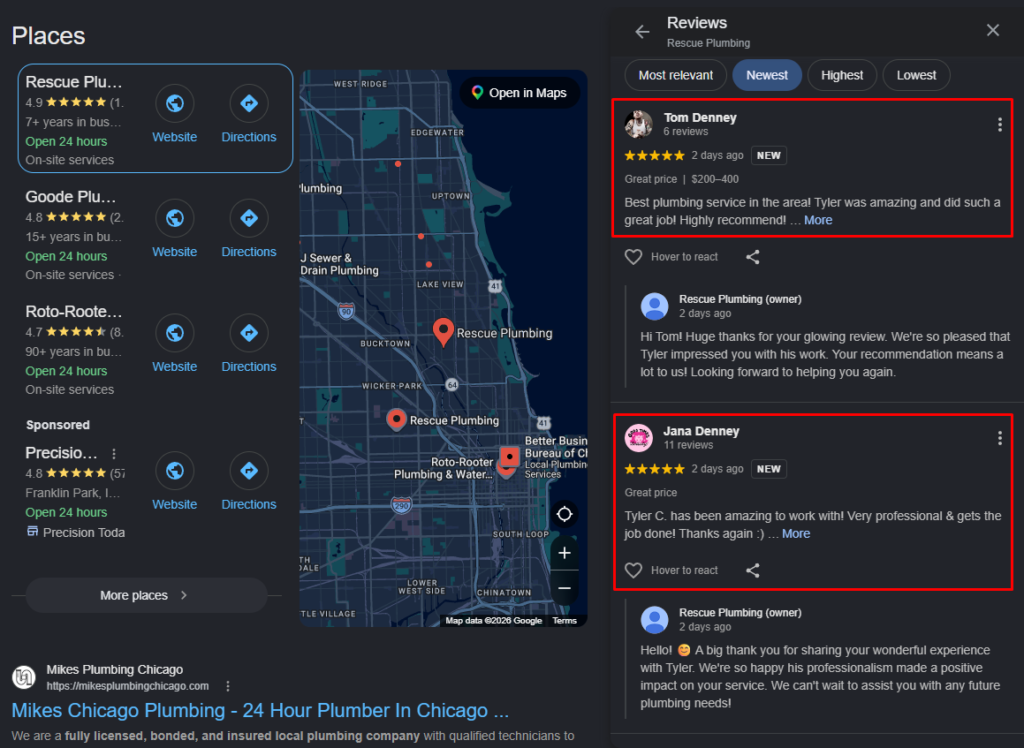
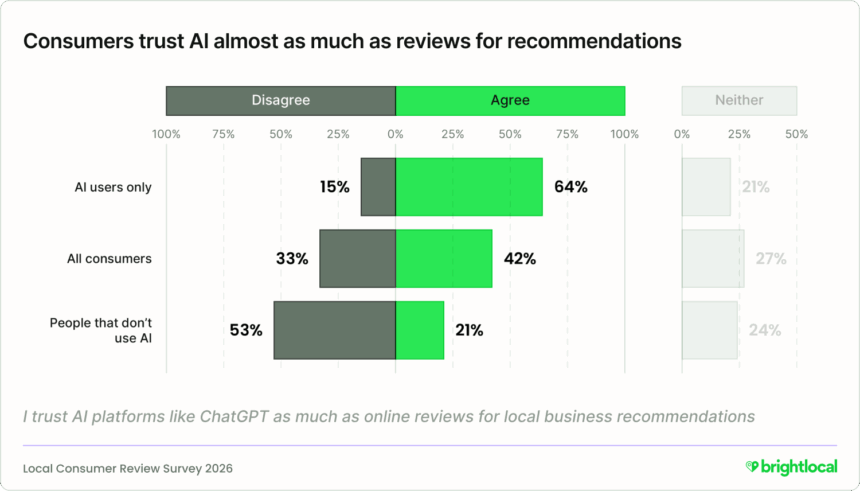
Today almost every consumer reads reviews for local businesses before deciding. Only few of small businesses have any kind of structured review management strategy – which means the businesses that do ask for reviews consistently and respond to them have a significant, measurable advantage.
Consumers who do a local mobile search visit or call a business within 24 hours. That means your website must load fast, display cleanly on a phone screen, and make it effortless to call or get directions in one tap.
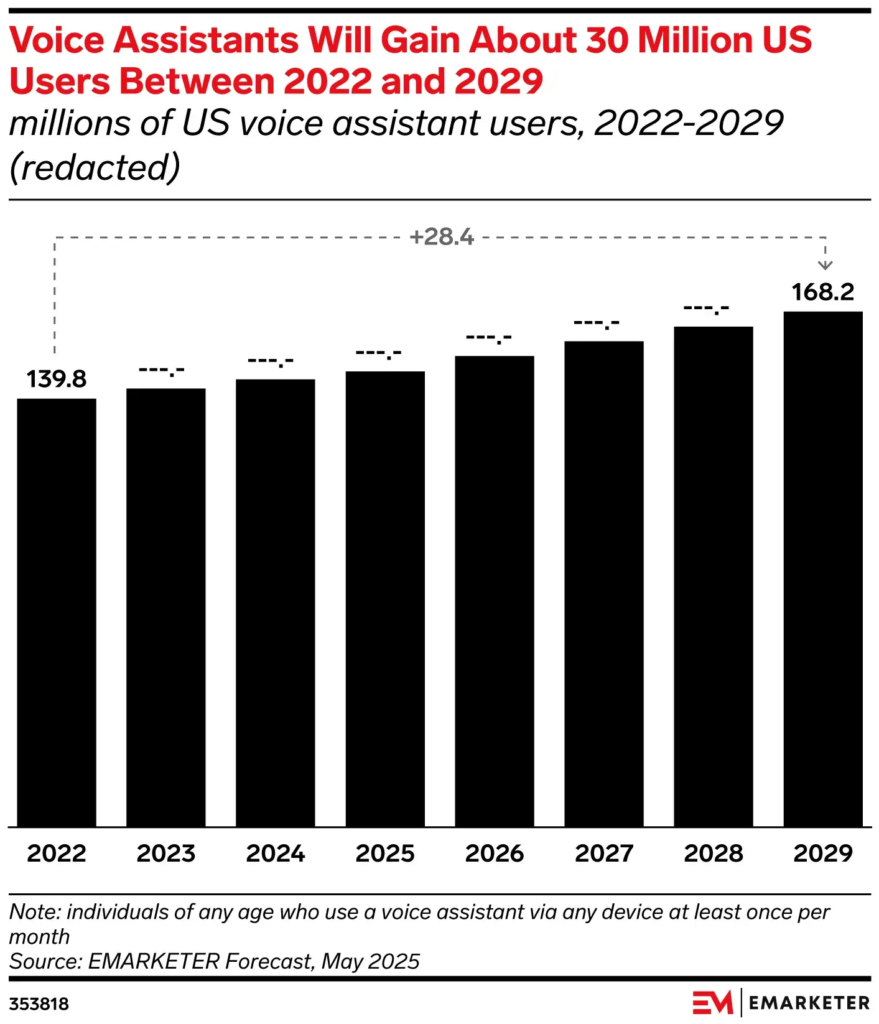
Voice search amplifies this further – 76% of voice queries are local or ‘near me‘ in nature. Voice results favor businesses with complete GBPs, strong reviews, and conversational FAQ content on their websites.
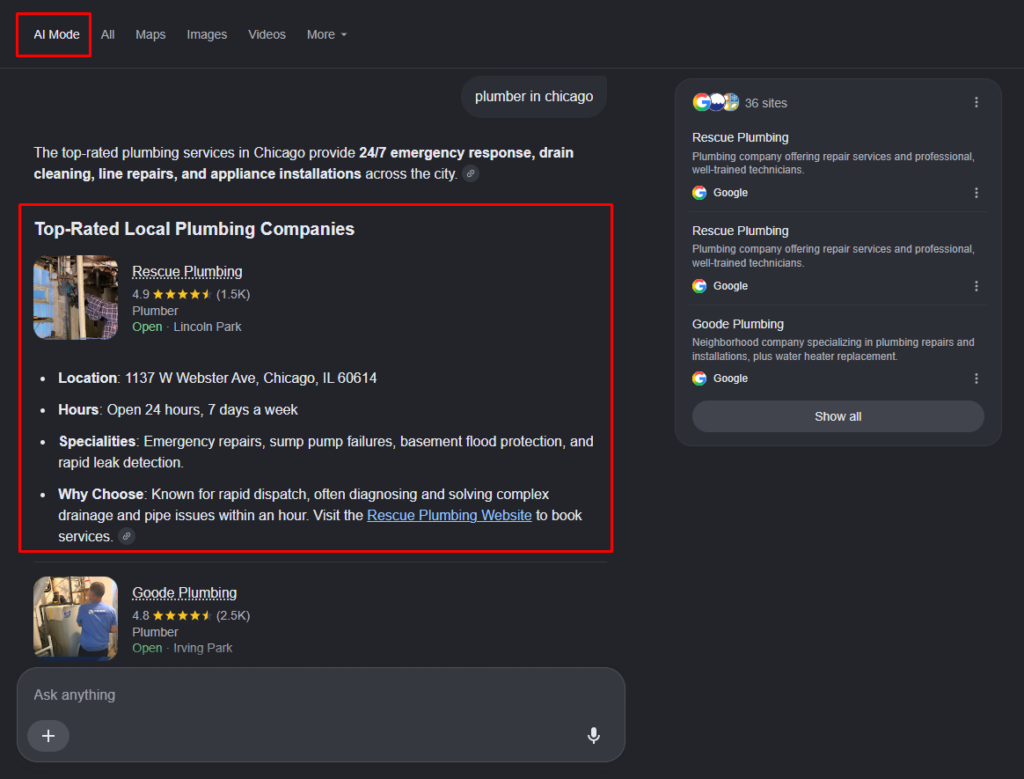
This is the newest element in local SEO – and the fastest-growing one. Google AI Overviews now appear for 40% of local business queries, and AI tools like ChatGPT and Perplexity are being used to find local businesses at a scale that didn’t exist 18 months ago.
To be cited by AI systems, your content needs to directly answer common questions in plain language (exactly what this guide is structured to do), your entity information (brand name, location, services) needs to be consistent everywhere, and your GBP needs to be current and complete.
Key Benefits of Local SEO for Small Businesses in 2026
So what do you actually get when local SEO starts working? Here are the six benefits small business owners see most consistently.
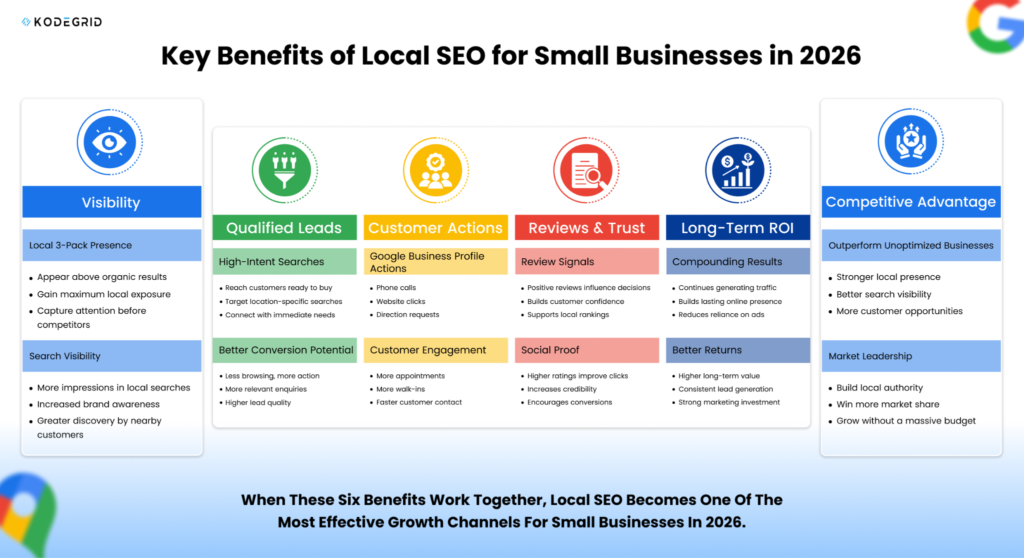
The local pack sits above all organic results. Three businesses get shown. The rest are invisible. When your business appears in those three spots, you’re seen by every local searcher before they scroll anywhere else – and businesses in the 3-Pack get more traffic than those just below it.
Someone searching ’emergency plumber in Houston’ has a problem right now and needs someone right now. Local SEO puts you in front of people with immediate, location-specific intent – not casual browsers. Most local businesses report that local SEO is their top lead generation channel, above paid ads and social media.
Google Business Profile actions – calls, direction requests, website clicks – increased 41% year-over-year between 2025 and 2026. A fully optimized local presence converts that search activity directly into customer interactions without any ad spend.
Most consumers visit a business website after reading positive reviews. The review management component of local SEO doesn’t just help rankings – it builds the kind of social proof that turns a searcher into a customer. A business with 200 reviews and a 4.7 rating wins the click over a competitor with 12 reviews at 3.9, every time.
Local SEO returns approximately $13 per $1 invested – compared to $8 for Google Ads. More importantly, paid advertising stops the moment your budget does. Rankings built through local SEO compound: they tend to hold, they attract links, and they continue generating traffic without ongoing spend. Most small businesses break even on their local SEO investment within 6 to 8 months.
Not every retailer still hasn’t claimed or fully optimized their Google Business Profile. That’s not a threat – it’s an opportunity. Most small businesses are competing in a market where the bar is surprisingly low. Getting your local SEO foundations right puts you ahead of the majority of your local competitors without needing a massive budget.
Local SEO is important for small businesses in 2026 because it helps them appear in local search results when nearby customers are actively looking for their products or services. It increases visibility, attracts qualified leads, drives calls and store visits, builds trust through reviews, and generates long-term growth without relying solely on paid advertising.
The case for local SEO has always been strong. But 2026 has changed the stakes significantly. Here’s what’s different now.
Consumers are increasingly looking for businesses that are nearby and relevant to their needs. In fact, “near me” searches now account for nearly half of all Google searches, showing just how important local intent has become.
Beyond traditional search engines, customers are also using AI-powered tools and assistants to discover local businesses, compare options, and get recommendations. This means businesses need a strong online presence not only for search engines but also for emerging AI-driven discovery platforms.
Google’s local algorithm prioritizes proximity and relevance over brand size and ad budget. A well-optimized independent restaurant in Seattle can outrank a national chain in local results because it has better reviews, a more complete GBP, and more location-specific content. This is one of the rare places in marketing where small businesses can genuinely win against much larger competitors.
Research continues to show that businesses with dedicated local marketing strategies tend to outperform those that neglect local search visibility. 59% of SMBs now rank local SEO above paid advertising as their top marketing priority and are likely to attract qualified local traffic, generate leads, and build trust within their communities.
As competition increases, the gap between businesses that prioritize local SEO and those that don’t is becoming more noticeable.
Google AI Overviews now appear for over 40% of local business queries. When someone asks Google ‘what’s the best electrician near me,’ an AI-generated answer may appear before any individual listing. The businesses pulled into that answer are the ones with complete, consistent, authoritative local SEO foundations. Without local SEO, you’re invisible to AI-generated discovery as well as traditional search.
Yes – especially for small businesses. Local SEO levels the playing field. Still your local competitors still haven’t optimized their Google Business Profile, which means the bar to stand out is low. For service-area businesses and home-based businesses, setting a service area in GBP (without displaying a physical address) still enables full local pack eligibility
Local SEO for small businesses isn’t a technical mystery – it’s a set of consistent, compounding actions that make your business visible to the people already searching for exactly what you offer.
The three things that matter most: keep your Google Business Profile complete and active, build consistent citations across directories, and make earning reviews a regular part of how you run your business. Those three actions alone will put you ahead of more than half of your local competitors.
For businesses that need hands-on execution – from Google Business Profile management and citation building to content creation and 360 digital marketing – working with a full-service digital agency can accelerate results significantly and free you to focus on running your business.