Ever wondered why some Web3 projects go viral while others vanish into the blockchain abyss — even when they spend the same on marketing? The difference isn’t luck or timing. It’s trust.
The real question isn’t who talks about your project — it’s who people believe when they do. And in the fast-moving world of crypto, that trust often lies in the hands of two powerful voices: Crypto KOLs (Key Opinion Leaders) and Crypto Influencers.
On one side are influencers, masters of attention and engagement. On the other are KOLs, the architects of credibility and community trust. Both move markets, but in very different ways.
Most projects don’t know which one they actually need. Every crypto founder and marketer faces the same question:
“Should we partner with a Key Opinion Leader (KOL) or a crypto influencer?”
Both hold power. But how they use it, who they speak to, and why they matter — that’s where things get interesting.
Understanding the difference between a Crypto Influencer and a Crypto KOL is crucial — it helps you identify what your project truly needs and determines how far it can grow in the market. Let’s break it down and uncover who really moves the needle in Web3.
What Are KOLs in Crypto?
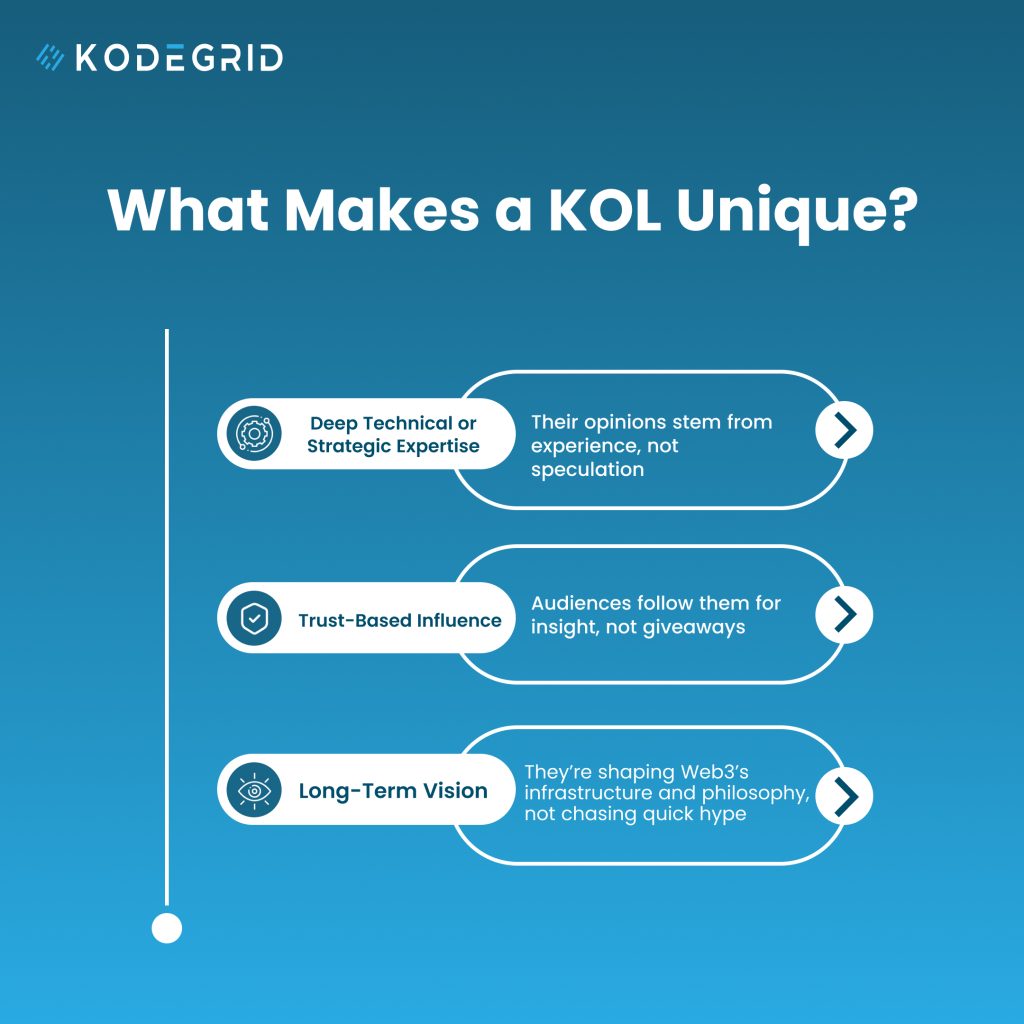
A Crypto KOL, or Key Opinion Leader, is someone whose expertise, authority, and deep understanding of blockchain give their words real weight. These are the people who educate rather than entertain, build rather than merely broadcast, and inspire trust rather than engagement metrics.
They might be developers like Vitalik Buterin, investors like Chris Burniske, or educators like Andreas Antonopoulos. Each KOL in crypto has a track record of contributing substantively to the industry — not just through posts, but through projects, code, books, and community-building.
Many of the top crypto KOLs have become trusted voices in the space, known for their consistent insights and meaningful contributions to blockchain innovation.
In short, KOLs shape the “why” and “how” of crypto’s evolution, while influencers often focus on the “what’s trending.
What Is a Crypto Influencer?
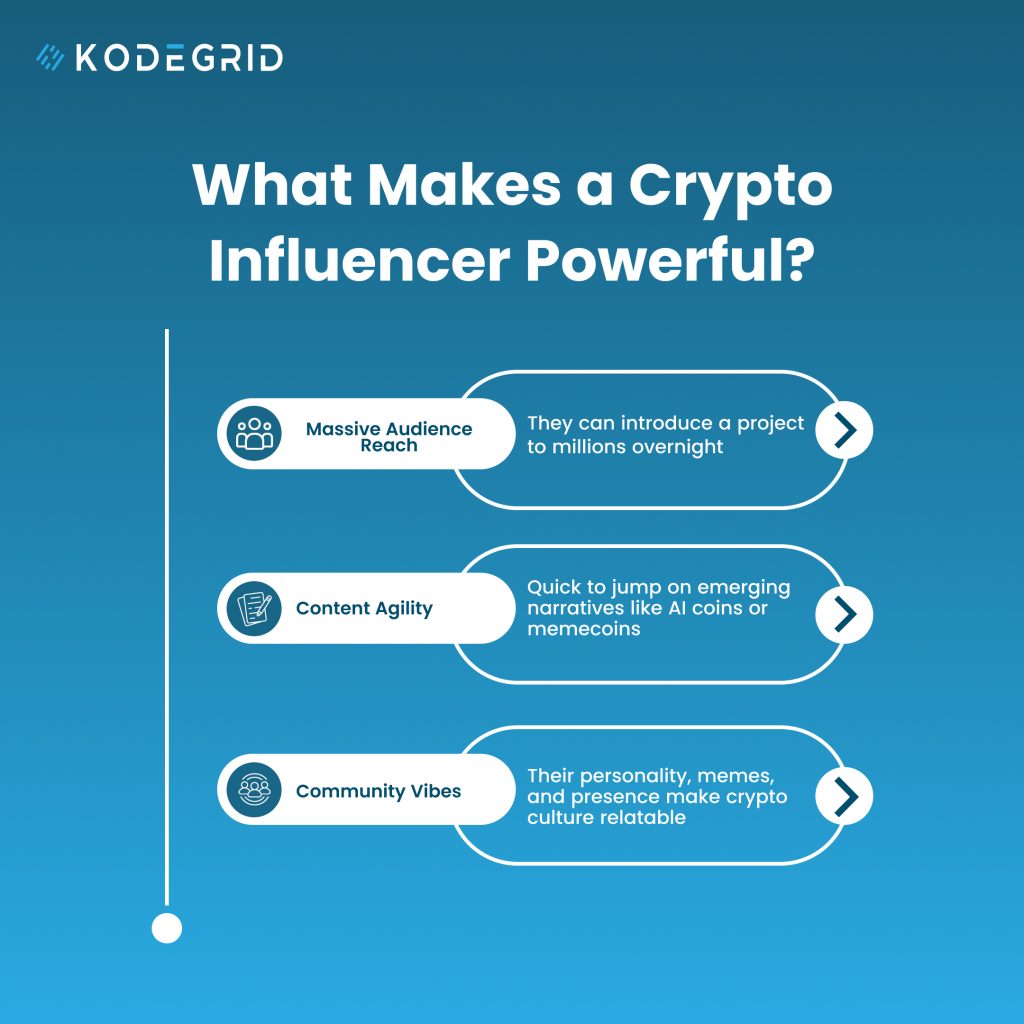
Crypto influencers are personalities who use social media to share market predictions, project reviews, or trading advice. They dominate platforms like X (formerly Twitter), YouTube, and TikTok. Their strength lies in reach, relatability, and speed.
A single tweet or YouTube video can spark massive FOMO or fuel a narrative around a new token. Influencers like BitBoy Crypto, Lark Davis, or EllioTrades have built empires on community-driven excitement and content consistency.
But here’s the catch — their credibility varies. Many influencers earn through paid promotions or affiliate links, and while that doesn’t necessarily invalidate their insight, it does mean the audience must tread carefully.
Influencers bring the buzz, but not always the backbone. They’re essential for early awareness — but lasting credibility still comes from the KOLs who back innovation with knowledge and proof.
Crypto KOL vs Crypto Influencers: Understanding the Differences and Impact
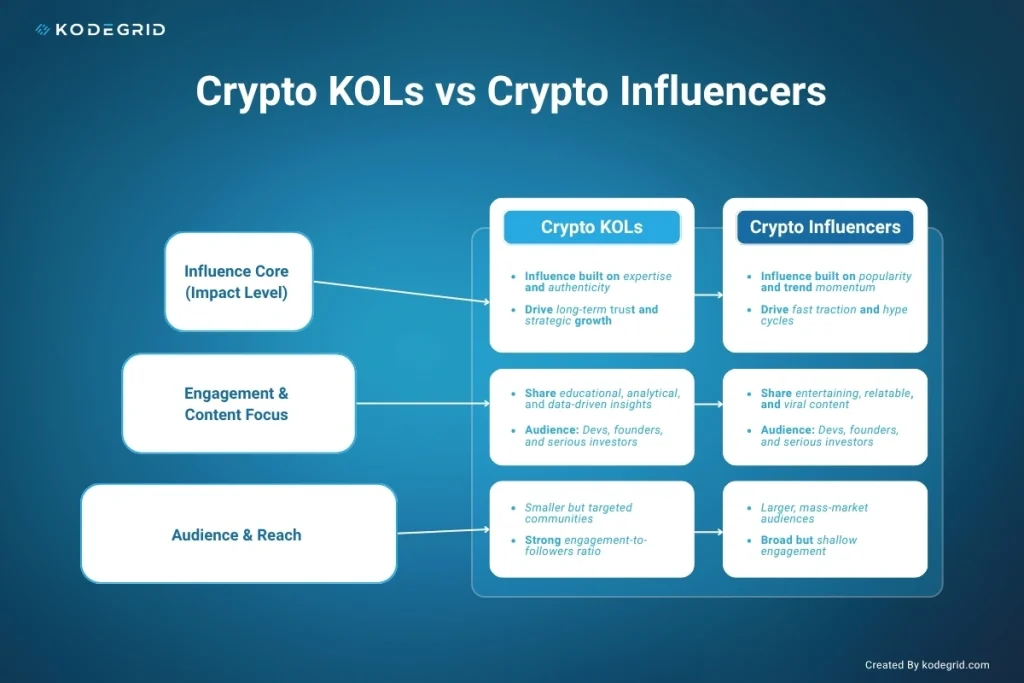
Here’s where it gets interesting — while KOLs and influencers each drive engagement, but their credibility and impact follow different paths.
1. Primary Focus
Crypto KOLs (Key Opinion Leaders) are like the professors of the blockchain world. Their focus is on education, innovation, and thought leadership — they explain why a project matters, not just what it does.
Crypto Influencers, on the other hand, are more like the show hosts. Their game is entertainment and exposure — simplifying crypto concepts, hyping trends, and keeping the vibe fun and engaging.
2. Audience Trust
KOLs build trust through expertise and consistency. They’ve usually been around the space for years, have real-world experience, and people follow them for their brains, not just their buzz.
Influencers earn trust through personality and hype. Their followers vibe with their energy, humor, or relatability — it’s a more emotional connection than intellectual.
3. Content Type
KOLs publish research-heavy content — think deep dives, protocol breakdowns, governance discussions, or opinion essays on the future of Web3.
Influencers lean into quick, catchy content — TikToks, memes, YouTube shorts, and Twitter threads that ride the latest market wave.
4. Longevity
KOLs last because of reputation and contribution. Their work keeps getting referenced even years later — they’re in it for the long haul.
Influencers thrive on virality and engagement. Their success depends on staying relevant and keeping the content fresh; one slow week, and the algorithm moves on.
5. Value to Projects
KOLs give a project legitimacy. When they mention your name, it’s like getting a stamp of approval from the crypto intelligentsia — “This has substance.”
Influencers give visibility. Their shoutouts get eyes on your project fast, sparking curiosity and buzz — “This has momentum.”
Crypto KOL vs Crypto Influencers: Which One is Better For You?
The benefits of influencer marketing are undeniable, and now that the line between authority and attention is clear, the question is —
Which one should your project partner with?
The benefits of influencer marketing are undeniable. Let’s break it down by goals:
1. If You’re Building Long-Term Value → Choose KOLs
If your project is tackling complex innovation — think scalability solutions, DeFi infrastructure, or L2 development — KOLs are your foundation. They help position your project within the serious, high-value Web3 ecosystem.
Why it works:
KOLs validate the technical legitimacy of your project.
They attract long-term investors and developers rather than short-term traders.
Their audience values education and innovation over hype.
2. If You’re Launching or Building Awareness → Choose Influencers
New tokens, NFT drops, or gamified projects benefit from influencer-powered awareness. Influencers generate viral momentum, bring in early community members, and get your brand trending.
Why it works:
Influencers build community energy through storytelling, visuals, and consistency.
They’re great for short-term visibility — like presales, mints, or token launches.
Their audiences act fast — ideal for time-sensitive campaigns.
3. If You Want the Best of Both Worlds → Combine Both Strategically
The smartest 2025 crypto projects aren’t choosing between the two — they’re blending them.
For example, a DeFi platform could collaborate with a respected KOL for educational AMAs while partnering with a popular influencer for a viral challenge campaign. This hybrid approach maximizes both depth and reach — ensuring that when the hype fades, trust remains.
Conclusion
The crypto world doesn’t just run on code — it runs on trust, vision, and attention. KOLs supply the trust capital, shaping narratives through research and credibility.
Influencers generate attention, liquidity, spreading awareness and energy across communities. Together, they create momentum that fuels both adoption and innovation. In 2025, the projects that win won’t just chase temporary hype — they’ll cultivate belief.They’ll know that real traction comes not from a single viral post, but from sustained trust and community alignment over time.
The smartest marketing stacks combine both: KOLs for substance, influencers for scale. So before your project chooses a partner, don’t ask who shouts the loudest — ask who speaks with depth, consistency, and conviction.